What Is Ballistic Gel? Types, Uses, and Real Impact Tests

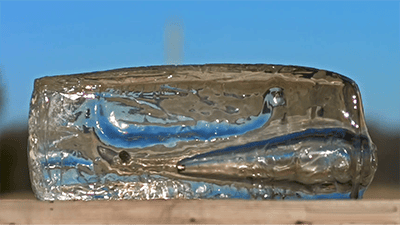
Ballistic gel, or ballistic gelatin, is a transparent, elastic material designed to closely mimic the density and resistance of human soft tissue. Originally developed for scientific and military research, it allows researchers to visually observe how different objects interact with a realistic tissue substitute under controlled conditions.
Today, ballistic gel is widely used in impact testing, product development, and educational demonstrations. It helps reveal penetration depth, energy transfer, and deformation in a way that numbers alone cannot fully explain. Because the gel is clear and reacts dramatically to force, every impact becomes easy to analyze and visually compelling.
For viewers, ballistic gel is fascinating because it makes invisible physics visible. In slow-motion footage, shockwaves ripple through the gel, cavities expand and collapse, and destruction unfolds frame by frame. These detailed visuals turn scientific testing into captivating content, perfectly blending real-world physics with striking slow-motion destruction.
What is ballistic gel?
Ballistic gel, also known as ballistic gelatin, is a standardized testing medium used to simulate the physical behavior of human soft tissue during high-energy impacts. It is designed to respond to penetration, compression, and temporary cavity formation in a way that closely matches real biological tissue, making it a reliable visual and analytical reference in impact tests.
The material itself is typically made from gelatin powder derived from collagen, mixed with water at precise ratios-most commonly 10% or 20% by weight. When prepared and cooled correctly, this mixture forms a clear, flexible block with consistent density and elasticity. Its transparency is a key feature, allowing internal processes such as penetration paths, fracture patterns, and shockwave propagation to be observed in real time or slow motion.
Gel is used instead of solid or layered materials because it behaves dynamically. Unlike wood, plastic, or rubber, ballistic gel deforms, stretches, and partially recovers after impact, much like living tissue. It also creates both permanent and temporary cavities, which are critical for understanding energy transfer.
Ballistic gel imitates human tissue because its density and resistance closely match that of muscle tissue. When calibrated properly, its response to impact correlates well with real-world biological effects, making it an effective and visually compelling tissue analog.
What is ballistic gel used for?
Testing of weapons and ammunition
One of the primary uses of ballistic gel is the testing of weapons and ammunition. By firing projectiles into calibrated gel blocks, testers can measure penetration depth, expansion, fragmentation, and energy transfer in a controlled and repeatable way. This allows different loads, bullet designs, or impact conditions to be compared visually and quantitatively.
Scientific and forensic investigations
Ballistic gel also plays an important role in scientific and forensic research. In laboratory settings, it is used to study wound ballistics, impact dynamics, and material behavior under extreme stress. In forensic investigations, gel tests help reconstruct shooting scenarios, estimate trajectories, and better understand how projectiles interact with soft tissue equivalents, supporting evidence-based conclusions.
Training (army, police)
In training environments, especially for military and law enforcement units, ballistic gel provides a safe and ethical alternative to real biological targets. It helps trainees visualize how projectiles behave after impact, how barriers affect penetration, and how shot placement influences outcomes. This visual feedback improves understanding without relying on live tissue.
Media and video recording
Beyond professional applications, ballistic gel has become a powerful medium in media and video production. High-speed cameras capture slow-motion footage of impacts, revealing shockwaves, temporary cavities, and dramatic internal destruction. These visuals transform technical testing into engaging content, making ballistic gel a centerpiece of educational, experimental, and visually striking videos.
The history of ballistic gel
The earliest experiments related to ballistic gel date back to the early 20th century, when researchers began searching for a consistent way to study projectile behavior in soft tissue. Before gel was adopted, scientists used animal tissue, soap blocks, or wet paper, but these materials were inconsistent and difficult to standardize.
Over time, gelatin-based mixtures proved to be far more reliable. By adjusting concentration and temperature, researchers could repeatedly produce blocks with predictable density and elasticity. This led to the development of calibration methods, ensuring that each gel block behaved the same way under impact. These standards made results easier to compare across different tests and experiments.
Ballistic gel eventually became the “gold standard” because it balances realism, repeatability, and visibility. It closely mimics human soft tissue, can be prepared with consistent properties, and remains transparent, allowing internal effects to be clearly observed. As a result, ballistic gel became widely accepted in research, training, and later in high-speed impact videos, where its dramatic and informative behavior truly stands out.
Physical properties of ballistic gel
Ballistic gel is valued because its physical properties closely resemble those of human soft tissue while remaining consistent and measurable. One of its key characteristics is density. Properly prepared ballistic gel has a density similar to muscle tissue, which allows projectiles or impacting objects to slow down, transfer energy, and deform in a realistic way rather than stopping abruptly or passing through unrealistically.
Elasticity is another critical property. Ballistic gel is soft and flexible, yet resilient. When struck, it stretches and compresses instead of cracking or shattering. This elastic response is essential for reproducing how real tissue reacts under sudden stress, especially during high-speed impacts.
Transparency sets ballistic gel apart from most other testing materials. Its clear structure allows viewers to see inside the block as an impact occurs. Penetration paths, internal fractures, shockwaves, and deformation can all be observed directly, especially when filmed with high-speed cameras.
When a projectile or object strikes ballistic gel, the material briefly behaves almost like a liquid, allowing energy to propagate outward. This creates two distinct effects: a temporary cavity and a permanent cavity. The temporary cavity is a rapid expansion of the gel caused by energy transfer, forming a large, short-lived void that collapses moments later. The permanent cavity is the lasting channel left behind, representing the actual displaced material.
Together, these properties make ballistic gel an ideal medium for visualizing impact physics. It responds dynamically, reveals internal processes, and turns otherwise invisible forces into clear, dramatic motion.
4 types of ballistic gel
There are several types of ballistic gel, each designed for different testing goals, budgets, and visual requirements. While all of them aim to replicate soft tissue behavior, their composition and practical use can vary significantly.
1. 10% Ballistic Gel (Standard)
The most widely accepted option is the 10% ballistic gel, made by mixing gelatin powder with water at a precise ratio. This formulation is considered the industry standard because its density and elasticity closely match human muscle tissue when properly calibrated. It is commonly used in professional testing, research, and reference demonstrations. The main drawbacks are preparation time, temperature sensitivity, and limited reusability.
2. Synthetic Ballistic Gel
Synthetic ballistic gel is a polymer-based alternative designed to offer greater durability and convenience. Unlike traditional gelatin, it does not require refrigeration and can be stored at room temperature. Synthetic gel is often clearer, more uniform, and easier to handle, making it popular for repeated demonstrations and video production. While it may not perfectly match organic gel in every scenario, its consistency and reusability make it a practical choice.
3. Reusable Gel
Reusable ballistic gel refers to materials-usually synthetic-that can be melted down and reformed after testing. This significantly reduces long-term costs and waste. Although repeated melting may slightly affect clarity over time, reusable gel remains highly effective for visual impact tests and slow-motion filming.
4. Gel With Additives
For more realistic simulations, ballistic gel can be combined with inserts such as synthetic bones, organ models, or layered materials. These additions help demonstrate how projectiles interact with complex structures, creating more lifelike damage patterns and visually striking destruction that closely resembles real-world conditions.
Ballistic gel products
Ballistic gel is available in several product formats, each designed for specific testing, training, or visual demonstration purposes. These products vary in size, complexity, and realism, allowing creators and researchers to choose the most effective setup for their goals.
Gel Blocks
Gel blocks are the most common ballistic gel products. They are rectangular or cubic bars made from either traditional or synthetic gel and are widely used in penetration and impact tests. Their simple shape makes results easy to measure and compare, while their clear structure is ideal for slow-motion footage. Gel blocks are versatile, easy to position, and compatible with a wide range of tests, from controlled laboratory experiments to dramatic destruction videos.
Human Mannequins
Full-size ballistic gel mannequins are designed to replicate the overall shape and proportions of a human body. These models are often used in advanced training scenarios and realistic demonstrations. They allow observers to see how impacts affect different body zones and how energy transfers through a human-like form, creating highly immersive and visually compelling results.
Body Parts
Some ballistic gel products focus on individual body parts, such as heads, torsos, arms, or legs. These specialized forms are useful for targeted testing and close-up visualization. Their detailed shapes make them especially popular in high-speed filming, where localized deformation, internal cavities, and structural interactions can be captured in detail.
Combined Targets
Combined ballistic targets integrate ballistic gel with other materials, such as simulated bones, clothing layers, or intermediate barriers. These setups provide more complex and realistic impact scenarios. By combining multiple elements in a single target, they produce unpredictable and visually rich destruction patterns, making them ideal for educational demonstrations and engaging slow-motion video content.
What happens to ballistic gel when shot or struck
When ballistic gel is hit by a fast-moving projectile, a dramatic internal reaction takes place. One of the first and most important effects is the formation of a temporary cavity. As energy is rapidly transferred into the gel, the material is pushed outward in all directions, creating a large, short-lived void that can be many times wider than the projectile itself. This effect is central to understanding what happens when ballistic gel is shot, as it reveals how energy spreads through tissue-like material.
At the same time, the internal structure of the gel is disrupted. Although ballistic gel is elastic, it has limits. Extreme stress causes stretching, tearing, and localized failure along the penetration path. Once the gel relaxes, a permanent cavity remains, showing the actual damage channel left behind.
The reaction differs when the gel is struck by a slower object rather than shot. Impacts such as blunt strikes or falling objects transfer energy more gradually. Instead of a large temporary cavity, the gel compresses and deforms, often rebounding back toward its original shape. This contrast highlights how speed, not just force, determines damage patterns.
Slow-motion footage makes these processes especially compelling. High-speed cameras reveal shockwaves, cavity expansion, and collapse frame by frame. Slow motion ballistic gel videos turn invisible physics into clear, mesmerizing visuals, allowing viewers to see destruction unfold in precise detail rather than as a single instant.
Why are videos with ballistic gel so popular?
Videos featuring ballistic gel combine strong visual appeal with intuitive storytelling, which makes them especially engaging for viewers. One of the main reasons is transparency. Because the gel is clear, the audience can see exactly what happens inside the target, turning invisible forces into something instantly understandable.
Another key factor is predictability of shape. Ballistic gel blocks and models have clean, familiar forms, so any deformation or destruction stands out sharply. When that ordered shape suddenly expands, fractures, or collapses, the contrast is visually striking and deeply satisfying to watch.
The destruction itself is also highly cinematic. Cavities form, shockwaves ripple through the gel, and fragments move in smooth, almost liquid motion. Captured in slow motion, these effects feel dramatic without being chaotic, creating a balance between control and impact that holds attention.
At the same time, ballistic gel videos offer real educational value. Viewers are not just watching something break; they are seeing physics, energy transfer, and material behavior in action. This combination of clarity, spectacle, and learning is why ballistic gel content consistently attracts large audiences.
Conclusion
Ballistic gel is a unique material that combines scientific accuracy with powerful visual impact. It mimics the behavior of human soft tissue, reacts dynamically to shots and strikes, and reveals internal processes that are normally impossible to see. From standardized gel blocks to complex combined targets, its many forms are used in real testing, research, training, and high-speed filming.
What truly sets ballistic gel apart is how clearly it turns physics into motion. Temporary cavities, permanent channels, and shockwaves become visible, especially in slow motion. If you want to see these effects in action, explore the full collection of ballistic gel videos below and experience real-world impact physics unfolding frame by frame.
FAQ
Is ballistic gel safe?
Ballistic gel itself is non-toxic and generally safe to handle. Traditional gelatin-based gel is made from food-grade gelatin and water, while synthetic versions use stable polymers. However, the tests performed on ballistic gel-such as high-speed impacts or firearm testing-require controlled environments. The material is safe, but the experiments around it demand proper precautions.
Can ballistic gel be made at home?
Basic ballistic gel can be made at home using gelatin and water, and many enthusiasts experiment with homemade blocks for demonstrations. That said, homemade gel is rarely calibrated to professional standards. Without precise ratios, temperature control, and calibration, results may look impressive but won’t accurately represent real-world impact behavior.
How similar is ballistic gel to the human body?
Ballistic gel is designed to mimic human soft tissue, particularly muscle, in terms of density and resistance. It does not replicate bones, organs, or skin on its own, but it provides a close approximation of how soft tissue responds to high-speed impacts. This makes it useful for visualization rather than full biological simulation.
Is ballistic gel used in real weapon tests?
Yes. Ballistic gel is widely used in professional testing, research, and training environments. Its consistency and repeatability make it a trusted reference material. While it doesn’t replace real-world data entirely, it remains an essential tool for comparing results and visually understanding impact effects.