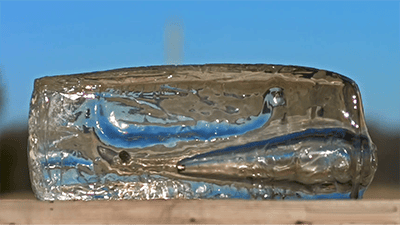
High-Speed Cameras: Principles, Applications, and Use in Destruction Analysis

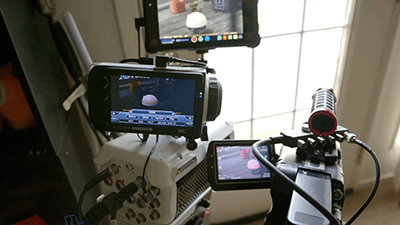
A high-speed camera is a device that can shoot a huge number of frames per second, capturing moments that are too fast for a normal camera and the human eye. To explain in simple terms, such a camera “freezes” very fast events so that they can be viewed in detail at high slow motion. This is why high-speed photography is almost always used in videos showing destruction, explosions, or rapid impacts.
It allows us to see what actually happens in a fraction of a second: how an object begins to crack, how a shock wave spreads, how materials deform, or how small particles fly apart. Without such cameras, all these details remain invisible and turn into a blurry flash or an instant bang.
As a result, high-speed shooting makes fast and dynamic processes spectacular, understandable, and vivid-both for entertainment and scientific analysis.
What Is a High-Speed Camera and How Does It Work?
A high-speed camera is a device capable of shooting video at extremely high frame rates, typically ranging from several thousand to hundreds of thousands of FPS. The classic definition implies a camera that captures fast processes in such detail that, when slowed down, it allows you to see every phase of the movement.
Such devices differ from conventional cameras not only in frame rate, but also in sensor design, data readout speed, and often in reduced frame resolution. Standard cameras are typically limited to 24–120 FPS, while high-speed models go far beyond these limits.
FPS (frames per second) is the number of frames that a camera records in one second. The higher it is, the smoother and more detailed the playback of fast processes in slow motion becomes.
A high frame rate is important because it allows you to capture moments that happen too quickly: deformation of materials, collisions, rapid movements of animals or technical mechanisms. Without a high shooting speed, such phenomena would appear blurred or completely invisible.
How High-Speed Cameras Work
1. Frame rate (FPS) and its role
A high-speed camera captures a huge number of frames per second, and it is the FPS that determines how much detail can be seen in a fast process. The difference between 240, 1000, and 10,000 fps is the difference between simply smooth slow motion and the ability to see every microphase of movement. The more frames are captured, the slower the video will play at standard speed because you are “stretching” real time.
2. Shutter speed
Shutter speed is equally important. If it is too long, moving objects will be blurred, which is especially noticeable in videos of destruction: fragments turn into streaks and details are lost. A short shutter speed freezes each frame, preserving clarity.
3. Light and high speed
High frame rates require a huge amount of light. With a short exposure time, the sensor receives less light, so powerful lamps, spotlights, or bright daylight are used.
4. Sensor and data processing
Sensors and data processing systems also play a critical role. High-speed cameras must instantly read and store enormous amounts of information, which makes them technically complex and expensive.
Where High-Speed Cameras Are Used
1. Scientific research
In science, high-speed cameras are used to study the behavior of materials under load, observe rapid physical processes, and analyze damage. They allow us to see how cracks form, deformation waves propagate, or liquids and gas flows behave. Such detail helps researchers better understand the properties of objects and the patterns of their behavior.
2. Industry
In the industrial sector, high-speed shooting is used for quality control and testing the durability of products. Cameras capture moments of component failure, mechanism malfunctions, and fast-moving processes on manufacturing line. This allows for improvements in design and increased equipment reliability.
3. Cinematography and advertising
In movies and commercials, high-speed shooting helps create dramatic, smooth slow motion, making visual scenes more expressive and appealing.
4. Entertainment format
Videos depicting destruction, from objects being broken to experimental impacts, are popular on the internet. People are drawn to the opportunity to examine the hidden details of rapid events and observe the unusual beauty of processes that occur in an instant.
Types of High-Speed Cameras
1. Consumer (240–1000 FPS)
This category includes smartphones and action cameras that offer basic slow motion. They are suitable for shooting active scenes, sports, or simple experiments, but they have limitations: reduced quality at high FPS, a small dynamic range, and a significant drop in resolution.
2. Semi-professional (1000–5000 FPS)
These are mid-range cameras designed for more demanding tasks. They offer better quality, stability, and flexibility of settings, which is why they are used in small studios, engineering projects, and technical shooting.
3. Professional and scientific (10,000–100,000+ FPS)
These include systems such as Phantom or Chronos, as well as comprehensive laboratory solutions. They enable the recording of fast physical processes, impact studies, and complex experiments with maximum detail.
4. Ultra-high-speed cameras (1,000,000+ FPS)
These are extremely rare devices used exclusively in scientific laboratories to study micro-phenomena, explosive processes, and the dynamics of light. They are not available to the mass market and require specialized infrastructure.
Why Slow Motion Reveals Destruction So Well
High-speed shooting allows us to see what in reality lasts microseconds - too fast for the human eye to capture the details. At the moment of destruction, short-term physical processes occur: materials deform, cracks spread almost instantly, and the impact energy is redistributed throughout the object at tremendous speed.
When a product or structure breaks, the crack can “run” across the surface in a fraction of a second. A high frame rate allows you to break this process down into separate stages, see exactly where the destruction begins and how it develops.
Material deformation is particularly noticeable: bending, compression, and shear-all of this becomes visible only when slowed down. The scattering of small particles and fragments also takes on a shape and trajectory that cannot be seen in real time.
In some scenarios, additional effects occur: cavitation bubbles, local ruptures, explosive destruction. High-speed shooting makes these instantaneous phenomena visible, transforming complex physics into an understandable and visually expressive picture.
Cameras Used To Record Destruction
For filming destruction, ranges from 1,000 to 10,000 FPS are considered optimal-it is at these values that the main stages of impact, deformation, and particle scattering can be captured. A lower frame rate will only give a general slowdown, and ultra-high values are only needed for very fast experiments.
Bloggers most often use mid-range cameras: Chronos 1.4/2.1, Phantom VEO entry-level models, or action cameras capable of producing 480–960 FPS. These devices provide a sufficiently high frame rate while remaining relatively compact and easy to use.
For high-quality shooting, it is not the maximum FPS that is important, but a combination of key parameters: short shutter speed, stable exposure, sufficient lighting, and acceptable resolution. Good optics and powerful lighting often play a decisive role.
Too high an FPS is not always useful: the higher the frame rate, the more the resolution drops, the more noise increases, and the more light and memory are required. Therefore, for most destruction filming tasks, a reasonable balance is more effective than extreme values.
Best Settings for Filming Destruction in Slow Motion
FPS
As mentioned earlier, 1000–5000 FPS is selected for clear slow motion. This is sufficient to see the key moments of impact and particle dispersion. Higher FPS is only needed for very fast processes.
Shutter speed
A short shutter speed is critical. If it is too long, the fragments and pieces will turn into blurred streaks. Values of 1/2000 second and shorter are typically used.
ISO
The higher the FPS and the shorter the exposure time, the more light the camera requires. Therefore, it is better to keep the ISO low to avoid noise and compensate for lighting with light sources.
Light
Powerful lamps or bright daylight are essential. Good lighting ensures a clear image and allows you to work at high frame rates without image degradation.
Distance to the object
You need to shoot close enough to capture the details of the damage, but not so close that you lose the overall picture or risk the safety of your equipment.
Shooting angle
Diagonal and side angles work best. They allow you to see the shape of the deformation, the trajectory of the fragments, and the dynamics of the process.
Common Mistakes
Insufficient light → blurred images
High-speed shooting consumes a significant amount of light. If there is insufficient lighting, the frames become dark, noisy, and lose detail. As a result, even a high FPS does not help-the video appears blurry and unclear.
Slow shutter speed → blurring
When something breaks, the fragments move incredibly fast. If shutter speed is too long, each fragment turns into a blurry trail. Therefore, shutter speed should be as short as possible to “freeze” the movement.
Incorrect focus setting
A common mistake is focusing on the wrong distance from where the shot will occur. As a result, the important moment ends up outside the focus area. It is better to determine the point of contact in advance and lock the focus manually.
Too small a distance
If the camera is too close, the frame may lose some of its context or be overloaded with details that are difficult to make out. The optimal distance provides both overview and clarity.
Inappropriate shooting angle
A direct frontal view often hides the dynamics of destruction. Side or diagonal angles usually provide a much more informative picture.
Examples Of The Best Slow Motion Moments On Smash World
Conclusion
High-speed cameras open up access to a world of processes that are usually hidden from the human eye. They allow fast phenomena to be captured with such precision that even the most complex movements become understandable and clear. Thanks to their high frame rates, short shutter speed, and powerful sensors, these cameras are used in science, industry, cinema, and, of course, in the popular format of destruction videos.
High-speed shooting is ideal for demonstrating destruction: it makes microsecond processes visible-the spread of cracks, the scattering of particles, the deformation of materials, and other phenomena that cannot be seen in real time. That is why such videos are so impressive and attract attention.
If you want to see how the physics of destruction works in a variety of scenarios, check out the slow motion video compilations on our website. There you will find examples of footage shot with different cameras and be able to clearly see what high-speed technology is really capable of.
FAQ
How many FPS are needed for beautiful slow motion?
The optimal value depends on what you are filming. For smooth cinematic slow motion, 120–240 FPS is sufficient. If you are filming destruction, fast impacts, or flying debris, it is better to use 1000–5000 FPS. It is in this range that the motion phases becomes visible, and the frames are smooth and informative enough. Ultra-high values (10,000+ FPS) are only needed for very fast processes-bullet shots, explosive experiments, metal deformation.
Is it possible to film the destruction with a regular smartphone?
Yes, but with limitations. Modern smartphones are capable of producing 240–960 FPS, but this often results in reduced resolution, noise, and loss of detail. This is sufficient for impressive everyday videos: you will see general slow motion and basic dynamics. But for clear recording of microprocesses-cracks, small fragments, material bending-a smartphone will not be enough.
Why are slow-motion videos dark?
Because a high frame rate requires a short shutter speed. The sensor receives less light, which means the image becomes darker. If powerful lighting-spotlights, studio lamps, or bright daylight-is not used during shooting, noise, reduced sharpness, and a “dirty” frame effect will appear.
What is more important: FPS or shutter speed?
Both parameters are important, but they serve different purposes. FPS determines how slowly you can play back an event. Shutter speed is responsible for the clarity of each individual frame. You can shoot with a very high FPS, but if the shutter speed is slow, everything will be blurry. That's why, when it comes to destruction, they usually say: a high enough FPS and the shortest possible shutter speed. This is the key to sharp and informative slow motion.
Which camera is best suited for shooting destruction?
The best choice is semi-professional and professional cameras: Chronos, Phantom VEO, Phantom Flex, or high-end laboratory systems. They offer high FPS, low noise, stable exposure, and high-quality performance in bright lighting conditions. However, more affordable options are also suitable for beginners: action cameras with 480–960 FPS mode or the latest generation of smartphones.
Why can too high FPS be harmful?
Because the higher the FPS, the lower the resolution, the stronger the noise, and the higher the lighting requirements. In addition, the amount of data increases dramatically-one short clip can take up tens of gigabytes. Therefore, it is always better to seek balance rather than chase maximum numbers.